How to Choose a Dune Buggy That Fits Your Desert Plans
Choosing a dune buggy is less about picking the flashiest machine and more about matching the vehicle to the terrain, the driver and the kind of day you want. Desert driving can feel very different from ordinary off-road driving. Sand shifts under the wheels, slopes change without much warning and heat affects both the vehicle and the people in it. A careful choice makes the ride smoother and safer.
Start by defining what you want the buggy to do. A short ride over nearby sand dunes asks for different features than a longer trip across open desert terrain. Think about who will drive, how many passengers usually come along and whether the route is gentle or full of steep climbs. Clear expectations help narrow the field before details like colour or styling start to matter.
Set the purpose before comparing models
Begin with the experience you want. If the plan is relaxed driving on firm sand, a smaller buggy with manageable power can be easier to control. If the route includes soft sand, sharp approaches or long stretches between stops, a stronger engine type and a more durable chassis may matter more. The right choice is not always the fastest one. In many cases, steady power and predictable handling are more useful than aggressive acceleration.
Also consider the passengers. Extra seats add weight and change how the buggy behaves on slopes. A vehicle that feels light and nimble with one driver may feel slower and less responsive when fully occupied. If children are likely to ride along, look closely at seat position, side support and the way passengers are held in place. Comfort matters on warm days, especially when the ride lasts longer than expected.
When browsing information on dune-buggy-dubai.net, keep the decision tied to your own route and group size rather than choosing by appearance alone. Looks are part of the appeal, but control, visibility and fit have a much bigger effect on the quality of the drive.
Check the safety setup in plain terms
Safety should be one of the first practical checks. A suitable helmet should fit snugly, sit level and stay in place without pressing painfully. A safety harness should lie flat across the body, with straps that can be adjusted easily and buckled securely. Loose straps, twisted webbing or worn edges are warning signs. If anything about the restraint system looks damaged or confusing, do not treat it as a minor detail.
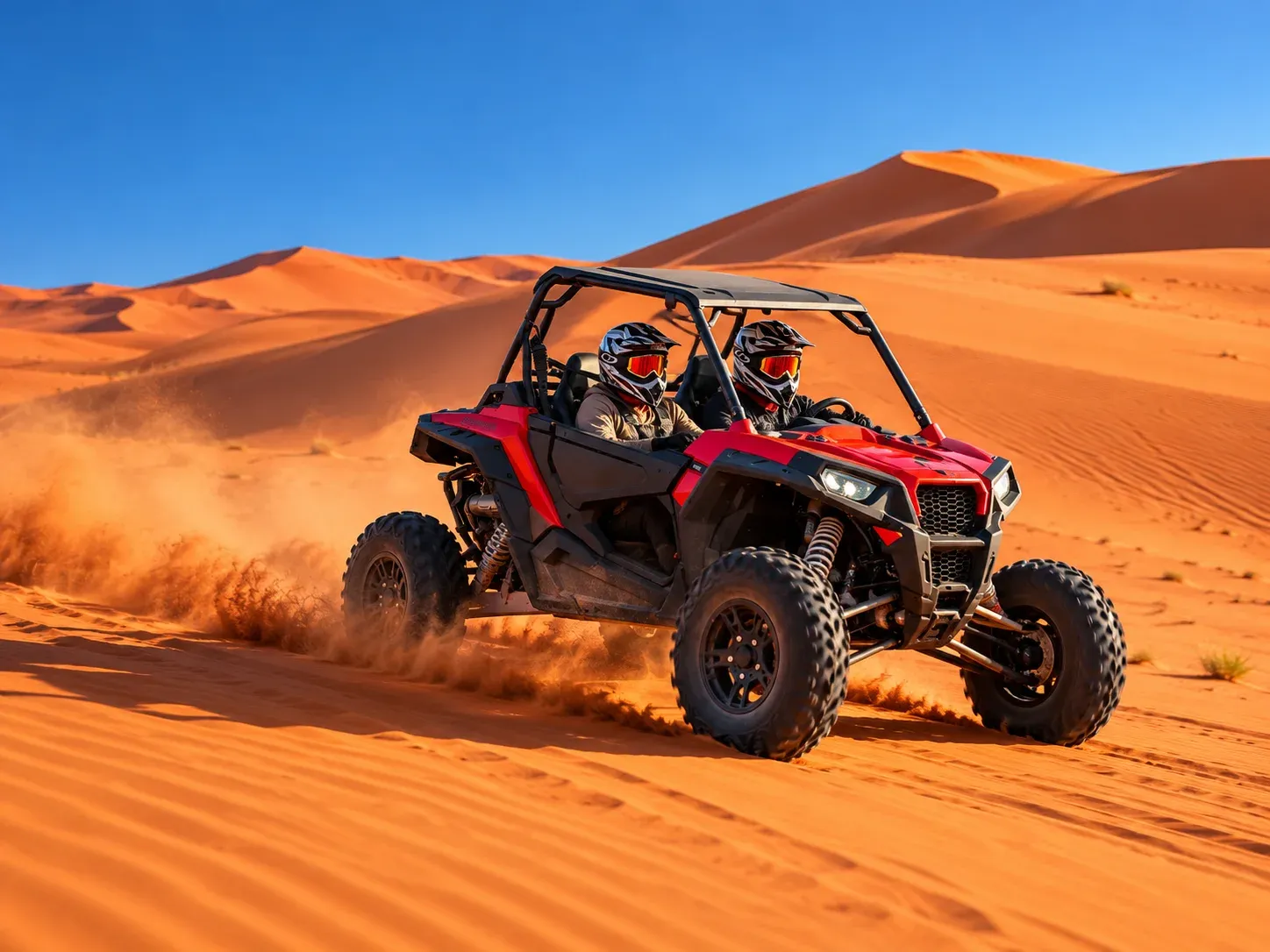
Roll protection is another point to examine. Sand dunes can create blind crests and uneven descents, so the buggy needs a structure designed for off-road use. Check that doors or side barriers feel solid and that there are no sharp edges near hands or knees. Footwell space also deserves attention. Drivers need room to brace without their feet slipping under pedals during a turn.
Visibility is easy to overlook. Before deciding, consider the driving position, the height of the sides and whether the view ahead feels open. Dust can reduce what a driver sees, so clear sightlines and well placed mirrors are useful. A buggy that feels cramped or blocks the view may become tiring quickly, even if it performs well on flat ground.
Match the buggy to the terrain
Desert terrain rewards vehicles that stay composed rather than fight the surface. Soft sand needs momentum, gentle steering and careful weight transfer. A buggy with too much power for the driver can break traction easily, while one with too little power may struggle on long climbs. The aim is a balanced machine that responds cleanly at moderate speed.
Ask what sort of ground the buggy is intended for. Firm tracks, loose dunes and rocky approaches all place different demands on the frame, suspension and wheels. A setup that suits smooth sand may feel harsh on rougher ground. If the plan includes mixed terrain, prioritise suspension travel, ground clearance and a chassis that can absorb bumps without throwing the driver off line.
tyre pressure is another practical factor. Sand tyres are designed to spread the load and reduce sinking. The correct pressure depends on the vehicle, tyre type and conditions, so it should be checked against reliable guidance rather than guessed. Underinflated tyres can overheat or slip off the rim, while overinflated tyres may float less effectively over soft sand. Any visible tire damage, bulging sidewalls or uneven wear should be treated as a reason to pause and seek advice from a qualified professional.

Compare control and comfort together
A good dune buggy should feel manageable before it feels exciting. Pay attention to the steering, pedals and seating position. Steering should respond smoothly rather than jerking suddenly. Pedals should be spaced so the driver can reach them without stretching or crossing legs. Seats should hold the body in place during turns, not let the driver slide from side to side.
Comfort is not just about soft padding. Heat, dust and vibration all affect concentration. A supportive seat, sensible airflow and a clear place to rest hands can make the drive less tiring. If the buggy has a canopy or wind deflector, check whether it improves comfort without limiting vision. A quieter ride can also help passengers communicate without shouting.
Storage is worth a brief look as well. Water, sunglasses and small personal items need a secure place that will not slide around. Loose items can become distracting on rough ground. Avoid carrying more than the buggy is designed to hold, and keep heavy objects low and settled.
Look for clear maintenance and operating information
Before making a final choice, ask for straightforward information about upkeep and operation. A well presented buggy should come with clear guidance on fuel, checks before driving and any limits that apply. Routine checks can be simple, such as looking for obvious leaks, checking that wheels are secure and confirming that lights or indicators work where fitted. Anything involving mechanical faults, electrical problems or braking concerns should be handled by a qualified professional.
Do not ignore small inconsistencies. Uneven wear, loose fittings, strange noises or a harness that does not adjust smoothly can point to broader issues. A buggy used in sand works hard, and regular care matters. The aim is not to find a perfect machine by appearance, but to spot signs that it has been looked after and is easy to understand.
While comparing options on dune-buggy-dubai.net, focus on the details that affect the drive: fit, restraint, terrain suitability and basic maintenance information. Those points are more useful than a long list of extras.
Make the final decision with a calm test of fit
The last step is to picture the whole ride, not just the vehicle on flat ground. Sit in the buggy if that is possible, adjust the seating position and check that the harness can be fastened properly. Imagine a slow turn, a climb and a descent. Does the driver have enough room to steer and brake with control? Can passengers stay settled? Are there any sharp edges, loose panels or awkward handholds?
Then compare the buggy with the route. For gentle dunes, comfort and easy handling may matter most. For more demanding desert terrain, a stronger frame, suitable tyres and a steady power delivery become more important. If there is doubt about a mechanical point, leave it to a qualified professional rather than relying on guesswork.
A well chosen dune buggy feels understandable from the start. It fits the driver, suits the group and handles the sand without demanding more skill than the day allows. By working through purpose, safety, terrain, comfort and basic condition in that order, the choice becomes much clearer, and the time on the dunes is more likely to feel enjoyable from beginning to end.